An idea to invest in waste recycling may start with buying a production line or searching for a suitable site. But the investment decision needs a fuller picture: what waste will the project receive? What are the requirements for handling it? How will the environmental impacts of the process be managed? And is there a market that can absorb the recovered products?
Environmental services are part of establishing the project and estimating its cost, not a step to postpone until after buying the equipment. The earlier the needs become clear, the better placed the investor is to choose the site and technology and define the scope of operation.
In Saudi Arabia, waste management requirements work together with environmental permits and other relevant licences. Below are the main services whose need should be assessed before investing, depending on the nature, size and location of the project.
First: Define the waste type and the scope of the activity
Describing a project as a "recycling plant" is not enough to define its needs. Recycling sorted plastic differs from treating mixed waste, and the requirements for receiving hazardous waste differ from those for non-hazardous waste.
It is therefore advisable to start with a technical assessment that identifies the sources, quantities and characteristics of the waste, the stages of receiving, sorting and treating it, and the recovered materials and residues it produces. This may require sampling and analysis when the characteristics of the materials are unclear.
This assessment is the basis for identifying the appropriate regulatory path: the Waste Management Law distinguishes between a licence and a permit, and defines the permit for recycling facilities as a document proving that the Center's controls and conditions have been met before obtaining licences from the competent authorities.
Second: Assess site suitability before committing to it
It is useful to commission a specialist to assess the proposed site before signing a long-term contract or approving the design. Depending on the activity, the assessment covers the site's proximity to sensitive uses, transport vehicle movement, storage areas, water and energy needs, and the likelihood of dust, odours, noise and leaks.
The aim is to find out whether the site can accommodate the project and the requirements for controlling its impacts, and whether the cost of preparing it could change the feasibility of the investment. Acceptance of the site remains subject to the conditions of the competent authorities.
Third: Prepare the environmental study that matches the project's classification
Study requirements are not determined simply by using the word "recycling"; they follow the approved environmental classification of the activity.
For example, for the Category Two construction permit service, the National Center for Environmental Compliance requires an Environmental Impact Assessment prepared by a service provider licensed by the Center. For Category Three, the requirements include a scoping report, followed by the Environmental Impact Assessment once the scope is approved.
In practice, the study should help the investor understand the expected impacts, identify measures to reduce them, and include their costs in the design and budget. It is therefore preferable to agree with the service provider on clear deliverables, including addressing the competent authority's comments within a defined contractual scope.
Fourth: Organise the permits and licences path
The investor needs to list the approvals linked to the project and distinguish between the requirements of the National Center for Waste Management (MWAN), the environmental permit from the National Center for Environmental Compliance, and the other licences that apply to the establishment.
MWAN provides a platform for submitting and tracking licence and permit applications, and there is a dedicated service for the permit to establish recycling facilities. The National Center for Environmental Compliance, for its part, oversees the issuing of environmental permits within its remit. A single approval should therefore not be treated as automatically completing all of the project's requirements.
It is useful for the consultancy deliverable at this stage to be a specific list of the required approvals, the responsible authorities, the documents, and the order of the procedures.
Fifth: Design residue management and pollution control
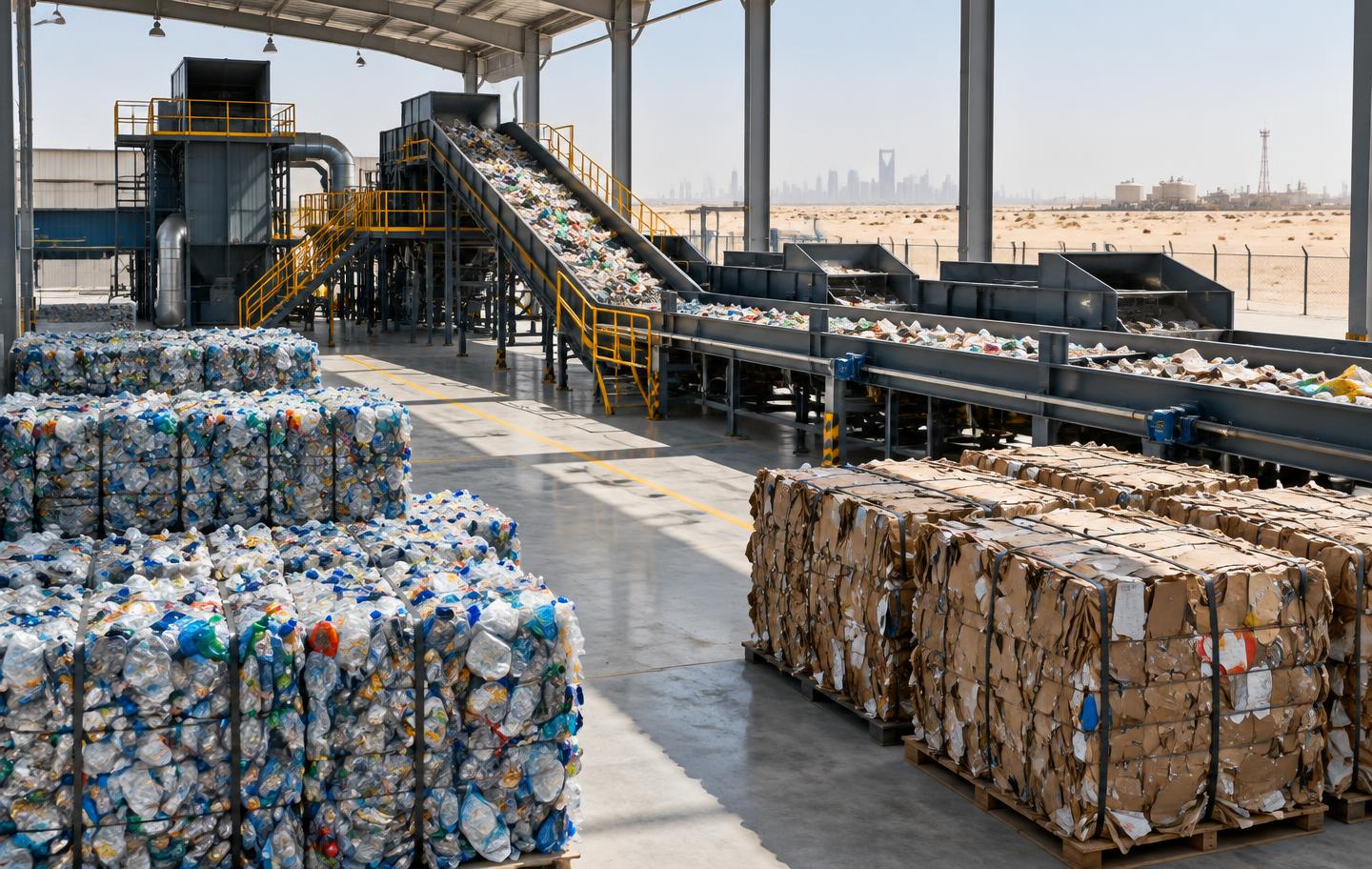
Recycling itself may produce rejected materials, wash water, dust or treatment residues. It is therefore advisable for the environmental design to cover the flow of materials inside the facility, including the receiving, storage and sorting areas, the routes for recovered materials, and how residues are handled.
Technical guides for materials recovery facilities stress the importance of planning the management of waste generated by treatment, improving its recovery, and organising its proper disposal. These guides are useful for the facilities they apply to, with reference to the controls specific to each activity.
Sixth: Plan for environmental compliance during operation
It is advisable to prepare an operational programme that turns the conditions of the approved permits and studies into actionable responsibilities and procedures. Depending on the project, it may include environmental measurements and analyses, record keeping, staff training, incident response, and follow-up of observations and corrective actions.
When contracting with entities that collect, transport or treat waste, verify that their licence is valid and that its scope matches the required service. MWAN provides a list of licensed and permitted entities that can be consulted for verification.
How do these services relate to investment feasibility?
Beyond meeting the requirements, the investment decision needs to test three elements: a continuous supply of waste to the required specifications, the efficiency of turning it into saleable products, and the ability of revenues to cover the costs of operation, compliance and handling residues.
It is therefore advisable to include the costs of studies, measurements, environmental control systems and support services in the feasibility study from the outset. Service provider quotations should also be compared on scope of work, quality of deliverables and experience with the activity, as well as price.
Planning a waste recycling project?
Define the waste type, the project's location, its target capacity and its development stage, then request the appropriate environmental services and compare service provider quotations through the Beati platform.
Submit your request and compare quotations before choosing
Request provider quotations(opens in a new tab)